From Chattanooga: What the Environmental Markets Conference Tells Us About Where Sustainability Is Heading
Mauricio López Sada
Managing Director, ALO Impact Solutions
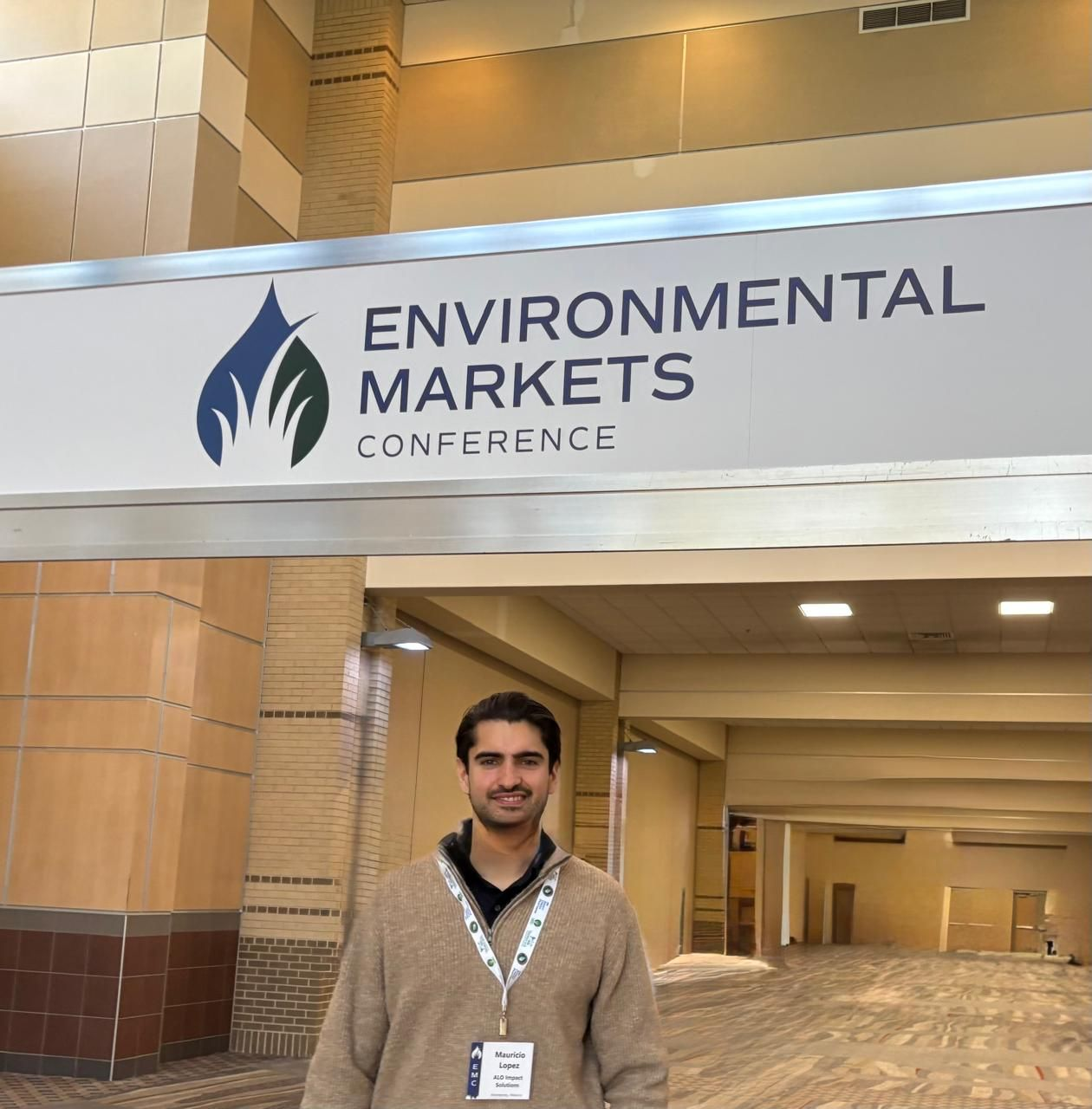
Earlier this month, our Managing Director Mauricio López Sada joined the Environmental Markets Conference (EMC) in Chattanooga, Tennessee, alongside partners at SWCA Environmental Consultants. It is one of the few spaces where the people buying, selling, and validating environmental credits actually sit in the same room. A few things stood out.
AI is now both driver and validator of environmental markets
The conversation around AI at EMC was not about hype. It was about demand. AI is accelerating the need for high-quality environmental credits, as data centers, manufacturing, and energy companies face mounting pressure to account for their footprint. At the same time, AI is becoming a tool to validate those credits, bringing more rigor to measurement, monitoring, and reporting. The same force creating the demand is raising the bar for what counts as a credible credit.
Tech and data centers are the next water stewards
For years, food and beverage and manufacturing companies led on water balancing and replenishment. That is changing. Tech and data center operators are following the same path, engaging in water stewardship to protect their license to operate in water-stressed basins. This is not a niche trend. It is a structural shift in who cares about water, and why. The companies that depend on water for cooling and operations can no longer treat it as a given. They are moving from compliance to strategy, and they are moving fast.
Bundling compliance and voluntary credits unlocks more impact
In the US, one of the most practical conversations was about credit structure. Bundling compliance-driven mitigation credits with voluntary ones can unlock stronger business cases and greater impact at scale. Instead of treating them as separate tracks, leading organizations are finding ways to make them reinforce each other. The result is more durable environmental outcomes and a clearer financial case for the companies funding them.
The power of translation
The most impactful moments at EMC happened when speakers moved fluently between technical, regulatory, and financial languages. A watershed model only matters if a CFO can act on it. A regulatory requirement only drives change if an operations team can implement it. This is exactly what we believe at ALO Impact: real change happens at the intersection of data, authentic relationships, and the ability to speak multiple languages, technical, regulatory, and financial. When that translation breaks down, good work stalls. When it works, it moves.
Relationships outlast any pitch
The biggest personal reminder from the conference was simple. Relationships and authenticity outlast any pitch. The deals, the collaborations, and the trust that carry environmental work forward are built over time, in real conversations, not in one-off presentations. We are grateful for the opportunity to keep exploring this space and building alongside partners like SWCA Environmental Consultants who share that standard.
What this means for our work
The signals from Chattanooga reinforce where we are focused: water stewardship for industries that depend on it, credible environmental markets backed by real data, and the ability to connect technical depth with financial and regulatory fluency. If your organization is navigating any of this, we would welcome the conversation.
By
Mauricio López Sada
Managing Director, ALO Impact Solutions