Most Water Strategies Solve the Wrong Problem
ALO Impact Solutions
Company
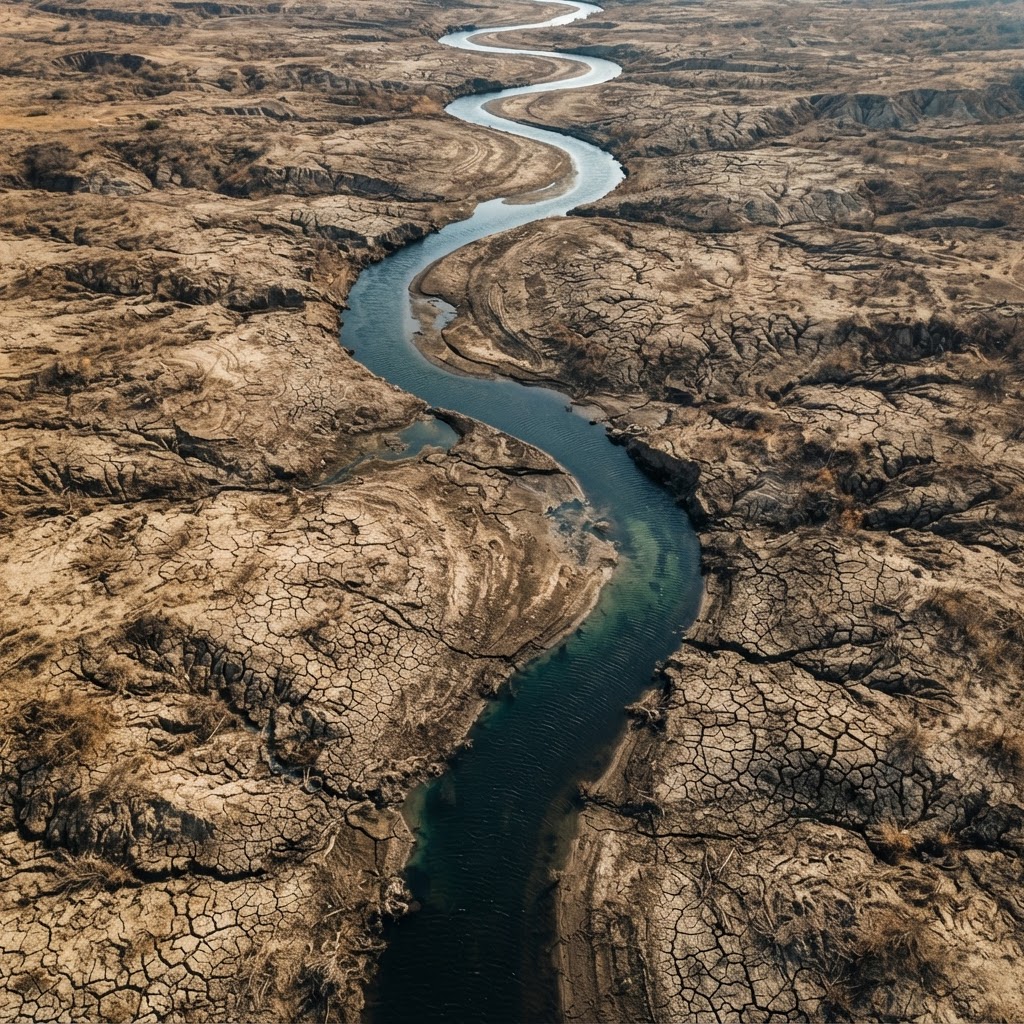
Water risk is fundamentally a business risk. It influences operational continuity, capital investment, regulatory compliance, expansion plans, and long-term resilience.
Understanding that risk requires an integrated assessment of source stability, regulatory exposure, basin context, operational vulnerability, performance gaps, and water balance. Those insights form the foundation of a robust mitigation plan, one that translates risk into measurable actions that reduce exposure over time.
At ALO Impact Solutions, we treat water risk as what it has become: a strategic business issue that determines whether growth plans hold up.
Water risk rarely announces itself as water risk
It surfaces as a stalled expansion, a denied permit, a financing covenant tied to water performance, a client audit the plant manager can't fully answer.
By the time it reaches the board, the company is reacting to a decision made somewhere else: a basin allocation, a new regulation, a parent company's disclosure requirement, months or years earlier.
Environmental · Financial · Regulatory · Operational · Reputational
Understanding the problem comes before the solution
Most water investments target the wrong lever, because the diagnosis was skipped. An efficiency upgrade doesn't help if the real exposure is basin-level competition for supply. A treatment improvement doesn't help if the permit itself is at risk.
- Water Source Risk Assessment: Identifies which lever actually matters.
- Water Risk Mitigation Plan: Turns the diagnosis into action, at the plant and at the watershed.
- Measure, Validate, Adjust: Then we track whether it's working.
Six areas. One integrated read of the risk
Data and documentation provide the foundation. Field verification completes it.
- Source stability: Can this source support operations for the next 10 to 20 years.
- Regulatory exposure: How permits, allocations, and reporting requirements are shifting.
- Basin context: Who else draws from the same source, and what that competition looks like.
- Vulnerability profile: Where operations are exposed under stress scenarios.
- Gap analysis: Where current practice falls short of what the risk requires.
- Water balance: What comes in, what goes out, what that leaves for the future.
This is where the diagnosis becomes a plan
Findings become a structured action plan at two levels. Neither works without the other.
- Inside the plant: What changes in operations, systems, and practice.
- At the watershed: What requires coordination beyond the fence line.
Then we track performance against baseline and validate that the mitigation is actually reducing the exposure it was designed to reduce.
Performance monitoring · Validation · Auditing
If your water risk needs a real answer, we should talk.
By
ALO Impact Solutions
Company